endometriosis gut connection

The Gut–Endometriosis Connection: What Your Microbiome Might Have to Do With It

Your gut bacteria don’t just digest your lunch — they might also be meddling with your endometriosis. We dig into the estrobolome (yes, that’s a real thing), what the research actually shows, and why a low FODMAP trial might be worth more than that random probiotic you bought.

Your gut bacteria don’t just digest your lunch. They might also be influencing your endometriosis — and your fertility.

When you think about endometriosis, you probably picture the pelvis — rogue endometrial tissue, inflammation, pain. What you probably don’t picture is your intestines. But emerging research suggests that the trillions of microorganisms living in your gut may play a more significant role in endometriosis than anyone expected.

And honestly? It makes a lot of sense. Up to 90% of women with endometriosis experience gastrointestinal symptoms — bloating, pain, altered bowel habits — and many are initially misdiagnosed with irritable bowel syndrome (IBS). 

Women with endometriosis have a threefold increased risk of developing IBS. The gut and the pelvis, it turns out, are more connected than the anatomy textbooks might suggest.

The Estrobolome: Your Gut’s Role in Estrogen Regulation

Here’s where it gets interesting. Your gut microbiome doesn’t just sit there passively fermenting fibre. A subset of gut bacteria — collectively called the estrobolome — actively metabolises estrogen.

These bacteria produce an enzyme called beta-glucuronidase (β-glucuronidase), which essentially reactivates estrogen that your liver has already packaged for excretion. When beta-glucuronidase frees this estrogen from its conjugated form, it gets reabsorbed into your bloodstream rather than leaving your body via your stool.

In a balanced gut, this system hums along nicely. But when the microbiome is disrupted — a state called dysbiosis — things can go sideways. An overgrowth of beta-glucuronidase-producing bacteria may lead to higher circulating estrogen levels. And since endometriosis is an estrogen-dependent condition (ectopic tissue grows and bleeds in response to estrogen), you can see where this is heading.

The theory: gut dysbiosis → increased beta-glucuronidase activity → more free estrogen → potential fuel for endometriotic lesions.

It’s an elegant hypothesis. But what does the actual research say?


What the Research Shows (and Doesn’t)

Let’s be clear upfront: we’re still in the “association, not causation” phase. The science is promising but not definitive.

Evidence for a gut-endometriosis link:

A 2025 systematic review and meta-analysis examining 11 studies involving over 1,700 women found that gut microbiota composition does differ between women with and without endometriosis — though the specific differences varied between studies. The authors concluded there’s a “clear link” between gut microbiota and endometriosis, but admit the exact mechanisms remain unclear.

In mouse studies, the connection is more dramatic. Mice treated with the antibiotic metronidazole developed significantly smaller endometriotic lesions and had lower levels of inflammatory markers (TNF-α, IL-6, TGF-β1) compared to untreated mice. Interestingly, other broad-spectrum antibiotics tested — ampicillin, neomycin, and vancomycin — did not have this effect. 

When researchers transplanted faeces from mice with endometriosis into metronidazole-treated mice, the lesions grew back. This suggests specific gut bacteria actively contribute to lesion progression — at least in mice.

Some studies have identified specific bacterial signatures. Women with stage III/IV endometriosis show increased abundance of certain bacteria, including Blautia and Dorea, which correlate with higher estrogen levels. One Taiwanese study found that women with endometriosis had higher levels of four estrogen metabolites in their stool and enrichment of specific bacteria (Eisenbergiella, Hungatella, and Erysipelatoclostridium).

The caveats:

However, the largest study to date — analysing the gut microbiomes of 1,000 women from an Estonian cohort (136 with endometriosis, 864 controls) — found no significant differences in microbial diversity, composition, or estrobolome enzyme activity between groups. The researchers concluded their findings “do not provide enough evidence to support the existence of a gut microbiome-dependent mechanism directly implicated in the pathogenesis of endometriosis.”

So what gives? The truth is that study populations, sample sizes, sequencing methods, and endometriosis staging vary wildly across the literature. Individual variation in gut microbiota is enormous — often greater than differences between disease groups. We’re still trying to find a consistent signal in a very noisy dataset.

The Inflammation Connection

Beyond estrogen, there’s another pathway worth considering: inflammation.

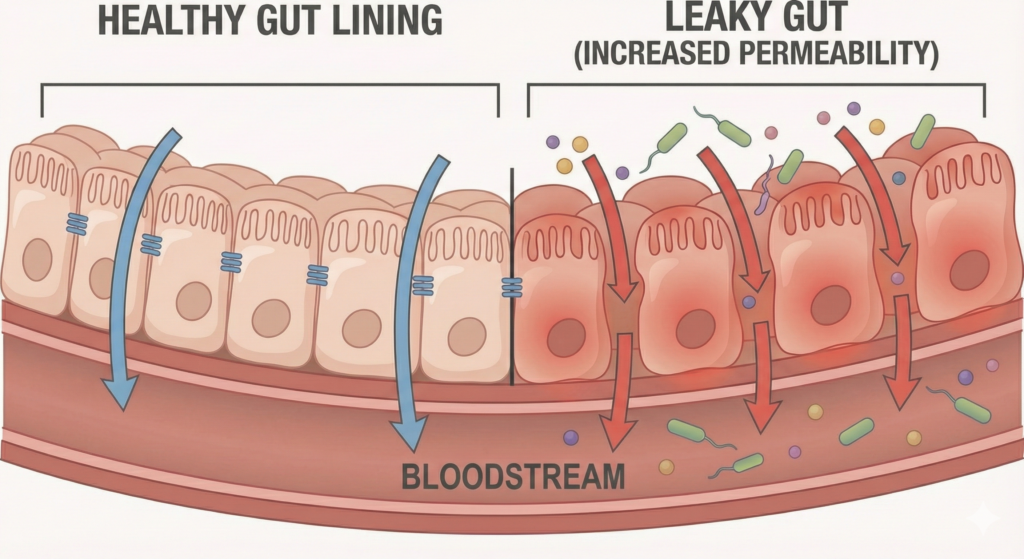
Endometriosis is fundamentally an inflammatory condition. Gut dysbiosis is also associated with increased intestinal permeability (sometimes called “leaky gut”), which allows bacterial products like lipopolysaccharide (LPS) to enter the bloodstream and trigger systemic inflammation.

This inflammation can disrupt the immune response, potentially affecting the body’s ability to clear misplaced endometrial tissue. Some researchers have proposed a “microbiome-gut-brain axis” in endometriosis, where gut bacteria influence not only inflammation but also pain perception, mood, and the hypothalamic-pituitary-ovarian axis that regulates hormones.

It’s a compelling framework. But again — more research is needed to move from plausible mechanism to proven cause.

What Actually Helps: The Low FODMAP Evidence

If the science on why gut health matters is still emerging, the research on what to do about it is more concrete — at least for symptom management.

The strongest evidence comes from low FODMAP diet studies. FODMAPs (Fermentable Oligosaccharides, Disaccharides, Monosaccharides, and Polyols) are short-chain carbohydrates that ferment in the gut, causing bloating, gas, and pain in sensitive individuals.

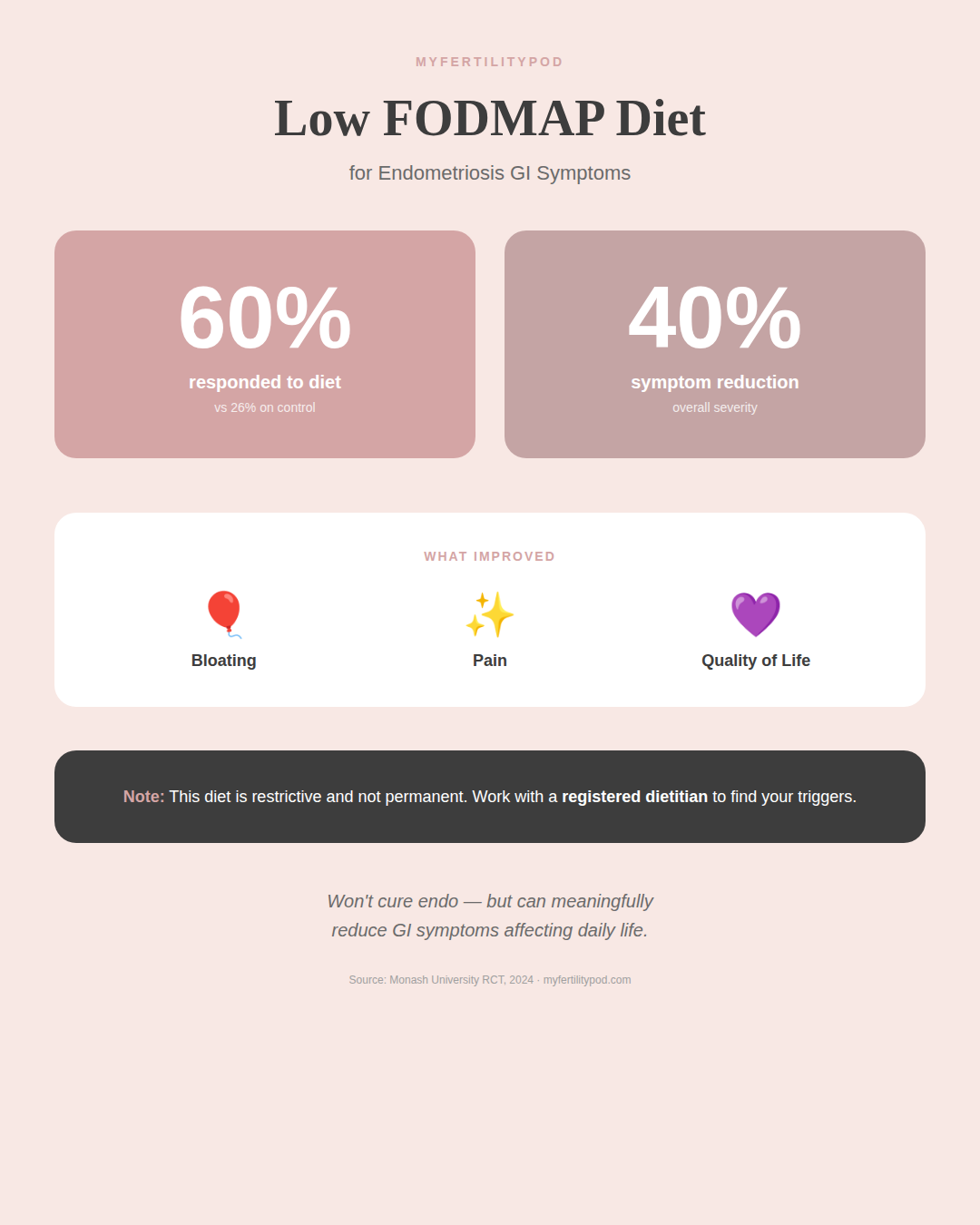
A 2024 randomised controlled trial from Monash University — the institution that developed the low FODMAP diet — tested it specifically in women with endometriosis and GI symptoms. The results were striking:

  • 60% of participants responded to the low FODMAP diet, compared to 26% on a control diet
  • Overall symptom severity was 40% lower on the low FODMAP diet
  • Abdominal pain and bloating improved significantly
  • Stool consistency normalised
  • Quality of life improved
endometriosis low fodmap

A 2025 prospective cohort study found similar benefits: significant improvements in constipation, pain, quality of life, emotional well-being, and even sexual function after following a low FODMAP diet.

The low FODMAP diet doesn’t treat endometriosis itself — it won’t shrink your lesions — but it can meaningfully reduce the gastrointestinal symptoms that make daily life harder. For many women, that’s a significant win.

Important caveat: The low FODMAP diet is restrictive and not meant to be permanent. It involves an elimination phase followed by systematic reintroduction to identify personal triggers. It’s best done with guidance from a registered dietitian, especially since long-term restriction can reduce beneficial gut bacteria.

What About Probiotics and Prebiotics?

Here’s where we need to manage expectations — but also where things are getting more interesting.

Probiotics:

The idea is appealing: if dysbiosis contributes to endometriosis, could restoring “good” bacteria with probiotics help?

In animal studies, the answer looks promising. *Lactobacillus gasseri* OLL2809 suppressed the development of endometriosis in mice by activating natural killer cells. Another mouse study found that treatment with *Saccharomyces boulardii* (a probiotic yeast) and *Lactobacillus acidophilus* significantly reduced lesion volume and size after just 4 weeks.

Human evidence is more limited but encouraging. A randomised, double-blind, placebo-controlled study found that *L. gasseri* tablets improved menstrual pain and dysmenorrhea in women with endometriosis. A separate pilot trial showed that oral Lactobacillus significantly alleviated endometriosis-associated pain, particularly dysmenorrhea and chronic pelvic pain, after 8 weeks of use.

Several clinical trials testing specific probiotic formulations in endometriosis patients are currently underway, which should provide clearer guidance in the near future. But for now we still don’t have large-scale clinical trials confirming which probiotic strains work best, at what doses, or for whom.

Prebiotics:

Prebiotics — non-digestible fibres that feed beneficial gut bacteria — are also being explored. Compounds such as inulin, fructooligosaccharides (FOS), and galactooligosaccharides (GOS) encourage the growth of *Lactobacillus* and *Bifidobacterium* species.

They also stimulate the production of short-chain fatty acids (SCFAs), particularly butyrate, which has anti-inflammatory properties and supports intestinal barrier integrity.

While there are no endometriosis-specific prebiotic trials yet, the biological rationale is sound: support your beneficial bacteria, and they may help manage inflammation.endometriosis and prebiotics
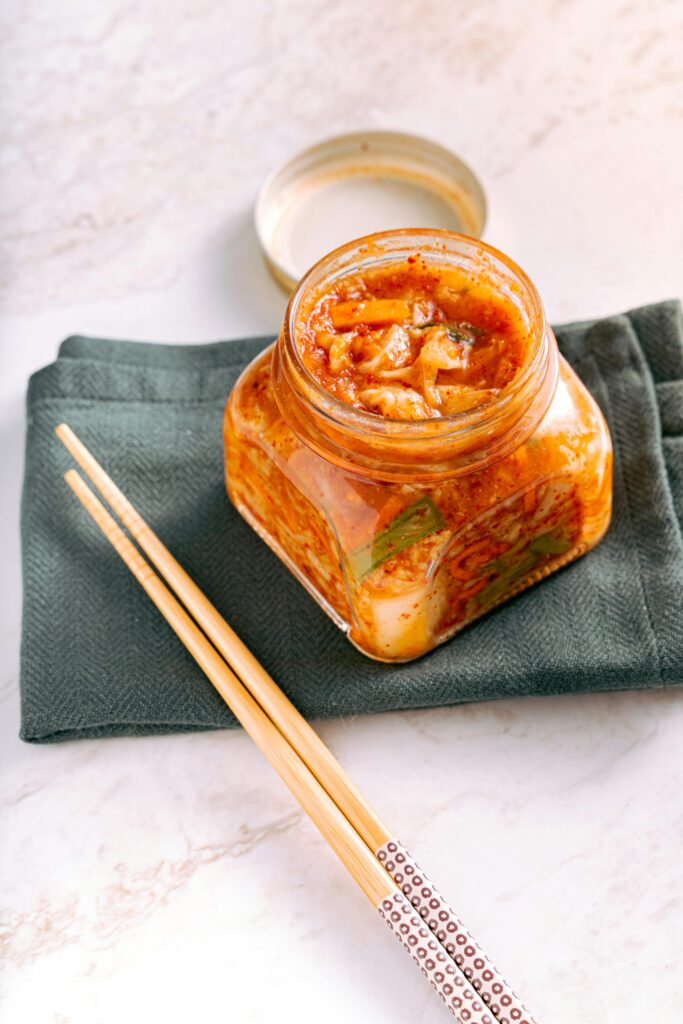
 

Fermented foods: The strongest dietary signal

Here’s where the science gets compelling. A landmark 2021 Stanford study found that a 10-week diet rich in fermented foods — yogurt, kefir, fermented cottage cheese, kimchi, sauerkraut, kombucha — significantly increased gut microbiome diversity and reduced 19 inflammatory markers, including interleukin-6 (a key player in chronic inflammation).

Interestingly, a high-fibre diet alone did *not* increase microbiome diversity over the same period — though the researchers suggested it might with longer adherence. The fermented foods worked faster.

This hasn’t been tested specifically in endometriosis patients, but given that endometriosis is an inflammatory, potentially microbiome-linked condition, these findings are directly relevant. Fermented foods may be a practical, low-risk way to support gut diversity and reduce systemic inflammation.

The bottom line:

Probiotics aren’t magic pills for endometriosis — yet. But the early evidence, particularly for *Lactobacillus* strains, is more substantial than “we don’t know anything.” 

Prebiotics make biological sense but lack endometriosis-specific data.

Fermented foods have clearer, proven benefits for microbiome diversity and inflammation.
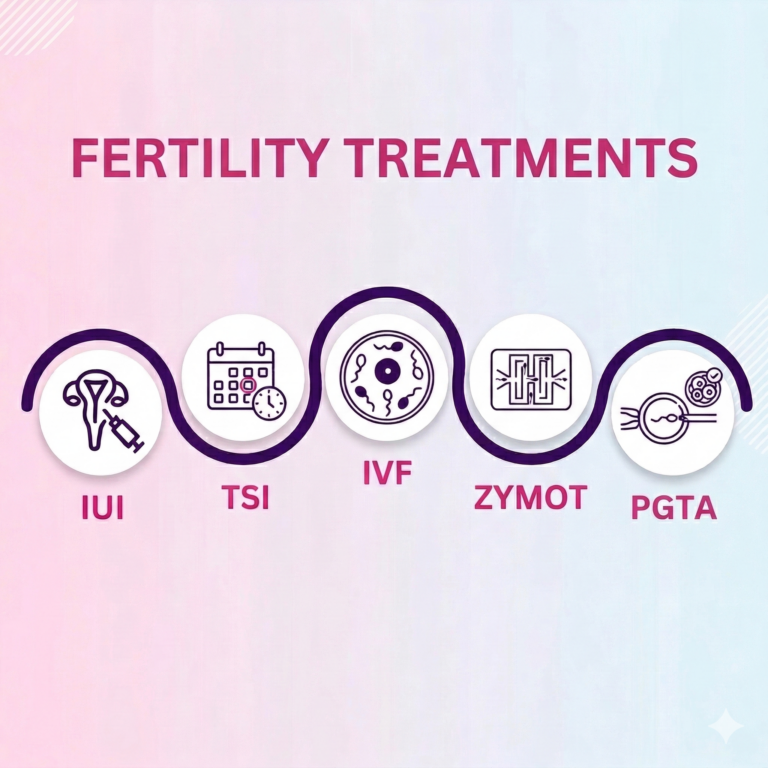
The Fertility Angle

If you’re reading this blog, you’re likely interested in how this connects to fertility.

The gut microbiota influences several processes relevant to conception: immune function, inflammation, estrogen metabolism, and possibly even the uterine microenvironment. Dysbiosis has been linked to conditions that affect fertility, including PCOS, recurrent miscarriage, and implantation failure.

For endometriosis specifically, the relationship is complicated. Endometriosis already impairs fertility through multiple mechanisms — inflammation, anatomical distortion, reduced egg quality, and altered implantation. Whether gut dysbiosis independently adds to this burden, or whether it’s part of the same inflammatory picture, isn’t clear.

What we can say: reducing systemic inflammation and supporting overall health — including gut health — is unlikely to hurt your fertility prospects and may help. It’s not a magic bullet, but it’s a reasonable piece of the puzzle.

Practical Takeaways

If you have endometriosis and significant GI symptoms:

  • A low FODMAP diet trial, ideally with a registered dietitian, has good evidence for symptom relief
  • This won’t cure endometriosis but may meaningfully improve quality of life

For general gut support:

  • Aim for 30g of fibre daily from diverse sources (vegetables, fruits, whole grains, legumes, nuts, seeds)
  • Include fermented foods regularly
  • Limit ultra-processed foods, which are associated with less diverse microbiomes
  • Consider omega-3 fatty acids (fatty fish, walnuts, flaxseed) — some animal research suggests they may help modulate gut bacteria and reduce endometriotic lesions

What to hold off on:

  • Don’t take random probiotics expecting them to treat your endometriosis — we don’t have the evidence yet
  • Don’t restrict multiple food groups without guidance — you may miss nutrients and paradoxically harm your microbiome

For everyone:

    • Talk to your doctor if you have persistent GI symptoms — they may warrant investigation beyond dietary changes
    • Remember that gut health is one factor among many in endometriosis. It’s not the whole story.

The Honest Bottom Line

The gut-endometriosis connection is real, biologically plausible, and actively being researched. But we’re not yet at the point where we can say “fix your gut, fix your endo.”

What we can say:

  • Gut dysbiosis is associated with endometriosis in many (though not all) studies
  • The estrobolome provides a plausible mechanism linking gut bacteria to estrogen-driven disease
  • Low FODMAP diets have solid evidence for reducing GI symptoms in women with endometriosis
  • Probiotics and other microbiome-targeted therapies are promising but unproven for endometriosis specifically

If you’re struggling with bloating, pain, and bowel issues alongside your endometriosis, your gut deserves attention. It may not be the cure, but it’s part of the conversation — and increasingly, it’s part of the science.

share this article:

Facebook
Twitter
LinkedIn

Want to Explore more?

Scroll to Top